1. The Evolution of Beverage Formulation: Chemical Dynamics & Consumer Paradigms
The global commercial beverage industry is undergoing its most radical transformation in half a century. Historically defined by simple sugar-water matrices, synthetic flavorings, and aggressive thermal pasteurization, modern beverage manufacturing demands complex multi-functional architectures. Today’s consumers expect hyper-functional ready-to-drink (RTD) beverages—ranging from high-protein plant-based milks and electrolyte-rich sports hydration to GLP-1 companion nutrition, gut-health prebiotics, and botanical cold brews—all while strictly enforcing "clean label," non-GMO, and organic certifications.
For food scientists, product developers, and B2B procurement executives, selecting the appropriate beverage formulation ingredients is no longer merely an exercise in flavor matching. It requires an intimate understanding of physical chemistry, colloidal thermodynamics, thermal processing kinetics (UHT, HTST, retorting, cold-fill aseptic), and electrolyte compatibility. A single change in pH or ionic strength can break an emulsion, precipitate soluble proteins, or induce severe syneresis over shelf life.
Colloidal Phase Stability
Managing Stokes' Law ($v = \frac{2g r^2 (\rho_p - \rho_f)}{9 \eta}$) in beverage matrices to eliminate creaming, sedimentation, and ring formation in RTD plant milks and juice blends.
Mouthfeel Reconstruction
Replacing dissolved sucrose solids in reduced-sugar beverages using hydrocolloids and soluble fibers that re-establish rheological body without adding caloric density.
Thermal Processing Survival
Selecting hydrocolloids and proteins capable of enduring severe UHT (135–150°C) thermal stress while preserving native solubility and preventing gelation.
As an Azelis company, Gillco Ingredients sits at the intersection of global ingredient synthesis and domestic technical execution. By analyzing technical inquiries submitted by commercial beverage brands, we have constructed this comprehensive master guide to simplify ingredient selection, address complex formulation bottlenecks, and clarify global procurement trends.
2. Rheological & Physicochemical Matrix of Beverage Formulation Ingredients
The table below illustrates the primary functional ingredient categories utilized in modern industrial beverage manufacturing, highlighting their critical performance parameters, pH thresholds, and primary industrial applications.
| Ingredient Category | Primary Functional Role | pH Stability Range | Thermal Resistance | Typical In-Formula Usage | Target Beverage Application |
|---|---|---|---|---|---|
| Gellan Gum (HA / LA) | Fluid gel network, particle suspension | 3.5 – 7.5 | High (UHT / Retort stable) | 0.02% – 0.06% | Plant milks, protein shakes, aloe vera drinks |
| Acacia Gum (Gum Arabic) | Flavor emulsion stabilizer, viscosity binder | 2.5 – 7.0 | Moderate to High | 1.0% – 12.0% | Citrus oil emulsions, flavor concentrates |
| High-Methoxyl Pectin (HMP) | Protein protective colloid in low pH | 3.2 – 4.4 | High (HTST acidic processing) | 0.3% – 0.8% | Acidified dairy, juice-protein blends |
| Organic Cane Sugar | Sweetness, solids content (°Brix), mouthfeel | 2.0 – 8.0 | High | 2.0% – 11.0% | Traditional juices, craft sodas, teas |
| Prebiotic Soluble Fiber (Inulin/FOS) | Fiber fortification, sugar replacer, body | 4.0 – 7.0 | Moderate (Acid hydrolysis risk < 3.5) | 1.5% – 5.0% | Gut-health RTDs, low-sugar sodas |
| De-oiled Sunflower Lecithin | Clean-label emulsifier, lipophilic dispersant | 4.0 – 8.0 | Moderate | 0.1% – 0.5% | Non-dairy creamers, RTD coffee lattes |
| Soluble Pea Protein Isolate | Nutritional enrichment, clean emulsification | 6.0 – 7.5 | Requires stabilizer at acidic pH | 2.0% – 8.0% | High-protein RTDs, sports nutrition |
3. Technical Product Breakdown: High-Performance Ingredient Recommendations
Achieving target sensory attributes while maintaining shelf-life stability demands precise ingredient selection. Below are technical recommendations categorized by core functional systems.
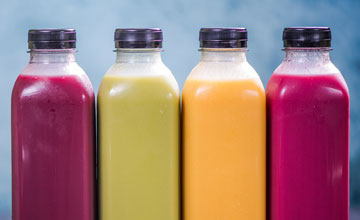
Beverage Hydrocolloids & Gums
High-acyl and low-acyl gellan gum, pectin, acacia gum, and custom stabilizer blends designed for particle suspension and mouthfeel restoration.
Clean-Label Antimicrobials
Fermentation-derived preservation systems, cultured dextrose, and buffered vinegars to extend non-thermal beverage shelf life.

Soluble Fibers & Sweeteners
Organic cane sugar, chicory root inulin, stevia extracts, erythritol, and specialty agave syrups for targeted °Brix adjustment.
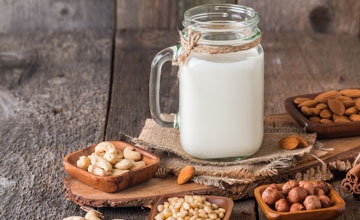
Plant Proteins & Lecithins
Soluble pea protein isolates, organic sunflower lecithin, and emulsifiers optimized for plant-based milk stability.
3.1. Hydrocolloid Systems: The Architecture of Suspension & Viscosity
In beverages containing insoluble particulate matter—such as calcium carbonate in oat milk, cocoa powder in chocolate RTD protein, or botanical pulp in fruit juices—gravitational settling is a continuous challenge. Low-acyl (LA) gellan gum forms a rigid, brittle fluid gel matrix capable of suspending heavy particles without imparting undesirable mucilaginous slime. Conversely, high-acyl (HA) gellan gum provides a soft, elastic gel that yields an exceptionally smooth, creamy mouthfeel, highly desirable in non-dairy milk formulations.
When formulating acidic protein drinks (such as whey-fortified fruit juices at pH 3.5–4.2), standard proteins undergo rapid denaturation and aggregation at their isoelectric point. Utilizing High-Methoxyl Pectin (HMP) forms a protective electrostatic barrier around the protein molecules. Under HTST pasteurization, this protective layer prevents thermal coagulation and maintains a smooth, liquid dispersion.
3.2. Clean-Label Emulsifiers: Oil-in-Water Equilibrium
Beverage emulsions—such as cloudifiers, citrus flavor concentrates, and lipid-rich keto coffee lattes—require robust surfactants to reduce interfacial tension between aqueous phase water and hydrophobic oil droplets. Synthetic emulsifiers like polysorbates and mono- and diglycerides are increasingly rejected by health-conscious consumers.
De-oiled non-GMO Sunflower Lecithin and Acacia Gum present optimal natural solutions. Acacia gum is a unique macromolecular hydrocolloid containing a proteinaceous core hydrophobic fraction linked to hydrophilic polysaccharide chains. This natural amphiphilic structure aligns at the oil-water interface, creating steric hindrance against droplet coalescence during homogenization at 2000/500 PSI.
3.3. Sugar Reduction & Glycemic Management Systems
Reducing sugar in beverage formulations creates a dual challenge: restoring lost sweetness while replacing the physical bulk and mouthfeel supplied by sucrose solids. Replacing 10% sucrose with high-intensity sweeteners like Stevia (Reb M / Reb D) leaves a watery liquid profile devoid of body.
To solve this, food formulators pair high-intensity sweeteners with Soluble Prebiotic Fiber (Chicory Root Inulin / FOS) or Organic Agave Carbohydrate Fractions. Soluble fibers restore dissolved solids, mimic the viscosity curve of sugar solutions, and deliver gut-health benefits—allowing for clean packaging claims such as "Good Source of Fiber" and "Zero Added Sugar."
Need Custom Beverage Formulation Support?
Our food scientists and technical procurement agents are ready to assist with hydrocolloid selection, micro-dosing blends, and sample requests.
4. Global Sourcing & Procurement Trends: Strategic Insights (2026–2030)
The procurement of beverage formulation ingredients has shifted from localized spot-market buying to strategic global supply chain architecture. Sourcing directors must navigate climate volatility, geopolitical shifts, and tightening global food safety legislation.
Trend 1: Climate-Resilient Agricultural Supply Chains
Extreme weather events in primary agricultural regions have introduced supply volatility for traditional ingredients like locust bean gum and crop-specific citrus pectin. Forward-thinking procurement teams are establishing dual-sourcing models and validating functional alternatives—such as cold-water-soluble acacia blends and fermented gellan matrices—that offer consistent price stability and reliable physical specifications year-round.
Trend 2: Shift Toward Pre-Blended Synergistic Functional Systems
Commercial beverage copackers and large-scale bottlers are increasingly moving away from purchasing single-component hydrocolloids. Managing separate inventory lines for xanthan, gellan, guar, and cellulose gum increases weighing errors and batch-to-batch inconsistency. Pre-blended, custom-engineered hydrocolloid systems simplify plant operations, reduce batch failure risks, and optimize cost-in-use through synergistic gum interactions.
Trend 3: Strict Ultra-Processed Food (UPF) Scrutiny & Regulatory Shifts
Global regulatory bodies and consumer watchdog groups are intensifying scrutiny of ultra-processed ingredients. Synthetic colors, artificial preservatives (e.g., sodium benzoate, potassium sorbate), and chemically modified starches are rapidly being phased out. Procurement managers must prioritize natural, fermentation-derived antimicrobials (such as cultured dextrose and buffered vinegars) and organic certified functional ingredients to ensure long-term regulatory compliance in North America and European markets.
5. The Gillco Advantage: Why Formulators & Procurement Leaders Partner with Us
For over 25 years, Gillco Ingredients, an Azelis company, has led the wholesale industrial food ingredient market by redefining distribution into a value-added technical partnership.
Global Scale via Azelis
Operating across 65+ countries, Azelis grants Gillco direct access to primary global ingredient manufacturers, ensuring supply continuity and competitive pricing.
Strategic US Warehouse Network
Extensive warehousing strategically positioned across the United States guarantees fast, reliable delivery to all 48 contiguous states.
In-House Application Expertise
Our dedicated team of food technologists provides hands-on technical guidance, benchtop formulation advice, and troubleshooting support.
Organic & Non-GMO Certified
Comprehensive organic distribution handling, full lot traceability, non-GMO project compliance, and rigorous quality assurance verification.
"At Gillco, every single inquiry is met by a real, dedicated technical expert. We do not hide behind automated voice queues or generic distribution portals. Our commitment is to deliver technical precision, market insights, and absolute supply confidence directly to your production line."
6. Frequently Asked Questions: B2B Technical & Procurement Solutions
Below are technical answers to common questions asked by beverage R&D teams, food scientists, and procurement managers when sourcing beverage formulation ingredients.
Protein sedimentation in acidic RTD beverages (pH below the protein's isoelectric point, typically pH 3.8–4.6) is controlled using High-Methoxyl Pectin (HMP) or Carboxymethylcellulose (CMC). These anionic hydrocolloids electrostatically bind with positively charged protein surface domains. This electrostatic interaction creates a steric protective shell that prevents thermal aggregation, curdling, and precipitation during high-temperature UHT or HTST pasteurization cycles.
De-oiled non-GMO sunflower lecithin, enzymatic-modified soy lecithin, and naturally harvested acacia gum (gum arabic) serve as premium clean-label emulsifiers. They effectively lower interfacial tension in oil-in-water beverage emulsions without the negative consumer perception or regulatory constraints associated with polysorbates, sorbitan esters, or synthetic mono- and diglycerides.
Removing sucrose reduces dissolved solids (°Brix), leading to a thin, watery mouthfeel. Formulators utilize low-viscosity acacia gum, soluble prebiotic fiber (inulin or FOS), or micro-dosed hydrocolloid blends (such as high-acyl gellan and xanthan gum) to restore the natural viscosity curve and tongue coating of sugar solutions without introducing gummy off-textures or cloudiness.
Complete commercial quality compliance requires an active USDA NOP Organic Certificate, Transaction Certificates (TC) for lot verification, a batch-specific Certificate of Analysis (COA) specifying heavy metal limits and microbiological standards, Allergen Statements, Non-GMO Project Verification documents, and Safety Data Sheets (SDS). Gillco Ingredients supplies complete compliance documentation packages with every shipment.
Procurement managers mitigate risks by partnering with global distributors like Gillco Ingredients (an Azelis company), leveraging multi-regional warehouse buffering, adopting standardized dual-gum functional blends, and maintaining pre-cleared secondary ingredient specifications to avoid production downtime during raw material shortages.
Natural preservation systems based on cultured dextrose, fermented cane sugar, buffered vinegar blends, and natural botanical extracts effectively inhibit yeast, mold, and spoilage bacteria in cold-chain and refrigerated beverages. These natural solutions maintain clean label status while matching the antimicrobial performance of synthetic sorbates and benzoates.
Streamline Your Beverage Formulation Sourcing Today
Whether you are reformulating an existing RTD beverage to achieve clean-label certification or engineering a novel functional drink from scratch, Gillco Ingredients provides the premium ingredients, technical guidance, and global supply chain integrity you need.